
“We Are Talking About Children”: Overworked Public Defenders and Youth Access to Justice

By Acacia Tripplett

“It is a moral failure for young people to become system-involved in the first place,” said Alice Wilkerson, executive director of Advance Maryland and the Advance Maryland Education Fund, reflecting a perspective shared by many youth justice advocates. Her organization is a member of the Maryland Youth Justice Coalition, which advocates for policies aimed at keeping youth out of adult court, expanding rehabilitative services, and centering the voices of system-involved young people and their families. While this work plays an important role in supporting children involved in the justice system, like many nonprofits, it operates within a broader system that is […]

Institutional Religious Freedom Under Executive Power

By Chelsea Langston Bombino

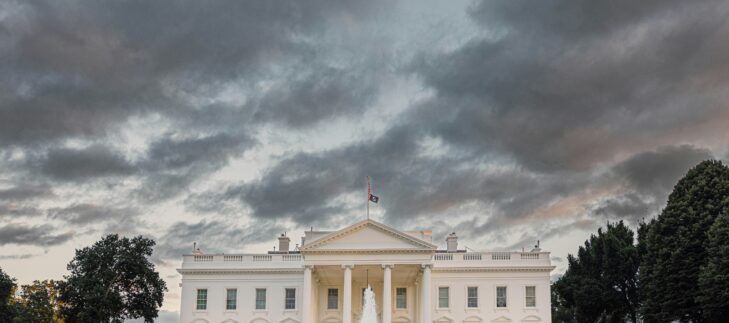
A recent forum convened by the Brookings Institution and Wake Forest University School of Divinity brought together legal scholars and public leaders to examine how the Trump administration has approached religious freedom through executive action, administrative policy, and public rhetoric. Rather than focusing narrowly on individual conscience claims, the conversation also focused on institutional religious freedom—how religious organizations, congregations, nonprofits, universities, and civic institutions experience freedom or limitation in the present governing moment. Incremental Executive Action and Real Continuity Christopher Lund, professor of law at Wayne State University, began by offering a measured assessment of the Trump administration’s executive actions touching […]

Institutional Religious Freedom in 2025 and the Work Ahead

By Dr. Girien R. Salazar

In 2025, across the courts, Congress, and federal agencies, questions of institutional religious freedoms, about how faith-based organizations (FBOs) participate in public life, have surfaced repeatedly. For those of us committed to a vision of public justice grounded in principled pluralism, 2025 offered both encouraging developments and cautionary lessons for churches, schools, charities, and other religiously motivated organizations that carry out their public missions in accordance with their deepest convictions. Judicial Developments Two cases in particular drew attention to how institutional religious identity functions in civic and public spheres. In Catholic Charities Bureau v. Wisconsin, the Supreme Court reaffirmed that religious […]

When Immigration Enforcement Meets the Eucharist: Why ICE Should Carefully Accommodate Religious Exercise by Institutions and Persons

By Chelsea Langston Bombino

On November 1, outside an Immigration and Customs Enforcement (ICE) detention facility near Chicago, Catholic Auxiliary Bishop José María García-Maldonado and eight other faith leaders attempted to celebrate Mass and offer the Eucharist to immigrants being held inside. They were denied entry. According to the Catholic News Agency (CNA), “Mass organizers said they followed the U.S. Department of Homeland Security’s guidelines to obtain access and submitted the request weeks in advance.” For years, Catholic ministers had been permitted to enter that facility and bring Holy Communion to detained immigrants who desired it. That longstanding accommodation has now been withdrawn. The denial […]

When Public Partnerships Falter: How Faith Communities Sustain Their Sacred Work

By Chelsea Langston Bombino

Throughout this past year, something far more consequential than a funding crisis has taken shape across faith-based civil society. Public partnerships that once allowed churches, synagogues, mosques, and faith-rooted nonprofits to accompany vulnerable neighbors have narrowed, stalled, or been recast under political conditions that many sacred institutions simply cannot accept without compromising who they are. These shifts surface a deeper question of public justice: whether our society is willing to safeguard the institutional freedom religious communities need to live out their sacred callings without coercion, and whether government will honor the rightful role of civil society rather than bending it toward […]

Show More