This article is the third in CPJ’s Ink & Impact series featuring young writers from across the country. In today’s political climate, often marked by cynicism and despair, CPJ’s annual Ink & Impact conference helps Christian young people become messengers of hope. In a world dominated by digital distractions, Ink & Impact develops writers who can articulate complex political topics in an approachable, nuanced way to inform the public.
Names have been changed to protect the identity of individuals.
A church-empowerment model can help local bodies of Christ participate in justice-making
Maria Romero walks into an Administer Justice (AJ) Gospel Justice Center in Aurora, Ill. and takes her seat in the waiting room of a small local church. At the beginning of the month, she sought help at a local family service center and was directed to another AJ clinic in the city. The clinic’s volunteer attorney and justice team connected her with a local pro bono attorney who would be willing to take on her case. This lawyer helped her secure an emergency order of protection from an abusive husband until her next court date. It is now the end of the month, and Romero wants our clinic to help her plan before her next court appearance where she will seek a plenary, or long-term, order of protection.
Romero confides her story to our attorney, client advocate, and myself, the Spanish interpreter. The client advocate role attends the attorney consultation, asks clarifying questions, and supports the client during their meeting. Afterward, they offer prayer and help the client make a next steps plan.
Romero tells us, in Spanish, that in Mexico, where she is from, she did not know of any option to have the authorities intervene and help her amidst the domestic abuse she was experiencing. She was shocked to find out that in the U.S. there are court-ordered protections for women like her.
During our 45-minute session, we learn about Romero’s oldest child who is studying at a college in Illinois. We also learn about the abuse she has undergone for more than 20 years, and we have the opportunity to speak truth to her. We tell her that she did nothing wrong—no one deserves the pain she has experienced.
After the consultation, the client advocate hugs Romero for a long time, and we cry together. Romero tells us, bleary-eyed, that she has not received a safe and loving touch like this one in far too long. Her own mother knew of the abuse and had never intervened, nor told Romero that what was happening was not acceptable.
As part of the AJ model, our follow-up advocate reaches out to Romero in the following weeks, asks about her court updates, and offers further assistance if needed. We continue to pray for her as a team, and we are incredibly grateful that court systems and nonprofits in this country can work together via their distinct roles to administer justice.
Moments like this one are made possible by the commitment of local churches willing to invest in their communities. After a few years of discernment and gathering funds, our church decided to open an AJ Gospel Justice Center. I joined the staff as Neighborhood Intern and was entrusted with starting the team our Parish Council had prayed for and our church sacrificially gave for. We covered the upfront cost to start a clinic, $5,000, and over the course of months, each volunteer underwent online training modules. All the training, prayer, and generosity led to powerful moments like this one as we gathered with Romero in our ministry space’s prayer office.
Romero’s story is a positive example of institutions partnering together to bring about justice. Not everyone, however, finds their way to a clinic like this one.
In the U.S. there is a massive discrepancy in legal access. More than 40 million low-income Americans are unable to access legal help each year. In 2021, there were only 10,479 legal aid attorneys nationwide. Imagine you are standing on the field of a huge football stadium such as Soldier Field in Chicago. The stadium is full, and every person has a legal question. There are only six lawyers available. If they spend 30 minutes answering questions, it will take six months to meet with everyone—if they work around the clock, 24/7 without a bathroom break.
As the Center for American Progress reports, while 90% to 95% of landlords are represented by lawyers before the Landlord and Tenant Branch of the D.C. Superior Court, only 5% to 10% of tenants have legal assistance. Unlike criminal defendants, parties in civil cases do not have a generalized right to counsel. While all states provide a right to counsel for at least a few types of civil cases, most parties in civil cases that involve high stakes and basic human needs, such as housing, do not have a right to representation.
In the criminal system too, those who cannot afford an attorney are at a disadvantage—even with the constitutional right to representation. Take, for instance, Terrence Miller, who met his court-appointed defense attorney for the first time on the morning of his first hearing on drug charges. The attorney, who had not handled a criminal case in seven years, had been assigned to Miller’s case only four days prior and was only able to speak to Miller for a few minutes. Yet the judge denied the lawyer’s requests for more time to prepare, and Miller was convicted in just a few days. A New Jersey appellate court affirmed the conviction on the grounds that Miller failed to prove that the trial would have gone differently had he met his attorney earlier. There are thousands of stories like this one.
The Law as God’s Gift
The law is God’s gift to us. When Moses proclaimed the Ten Commandments, the Israelites rejoiced. Their God promised kindness through clarity. While other Ancient Near Eastern groups struggled to know what upset their gods and sacrificed in vain, the Lord gave his beloved a clear path toward restoring a right relationship with God.
Jesus came to be our mediator and advocate, the perfect judge. We are desperately in need of someone who can defend us when we know we are guilty, who promises to pay our ransom and restore us to God.
The Christian has precedent to believe in quality representation and a hope for ultimate restoration and perfect judgment. With this biblically rooted high standard for due process, we are rightfully disappointed by the large discrepancy in access to quality legal aid in our country. While some in our nation benefit from legal advocates who emerge from the top law universities in the world, others are unable to find quality representation, or worse, experience fraudulent representation.
A Public Justice Framework
It is part of our kingdom calling to care about justice. CPJ’s public justice framework calls us to dynamic work as Christians — a shared calling of government, civil society institutions such as families, nonprofits, churches, businesses, and citizens to uphold the common good and work together for flourishing.
God has an intentional design for justice, and laments the distorting effects of sin on earth. But, we are called to anticipate glimpses of Christ’s redemption and renewal in all things. In my church’s prayer room with Romero, I felt a glimmer of that transformation.
The Center for American Progress, in their “Making Justice Equal” report, notes that today, unmet legal needs are at an unacceptable level and continue to grow as civil legal aid funding shrinks. Congressional appropriations for the Legal Services Corporation were just $385 million in 2016. In the early 1980s, by contrast, the corporation received more than $770 million annually. Adjusted for inflation, the corporation’s budget has decreased by 300% since 1981, even as the number of Americans eligible for aid has grown by 50%.
The report explains how around the country defendants find themselves represented by “undertrained, unsupported, or overloaded defense counsel.” Additional structural problems include courts “failing to provide counsel as required by the Constitution or state law; prosecutors pushing defendants to waive the right to counsel or to plead guilty; and judges permitting or even soliciting deficient waivers of the right to counsel.” Ultimately, this report claims that the criminal justice system suffers from a general lack of oversight and accountability.
Structural change when it comes to the U.S.’s legal system is needed. States need greater funding, and the criminal justice system needs to be reformed. Citizens can engage their representatives and support policy advocates who are invested in this work. The path toward redemption is non-linear and messy. But churches and believers have their own distinct calling to pursue justice in their communities.
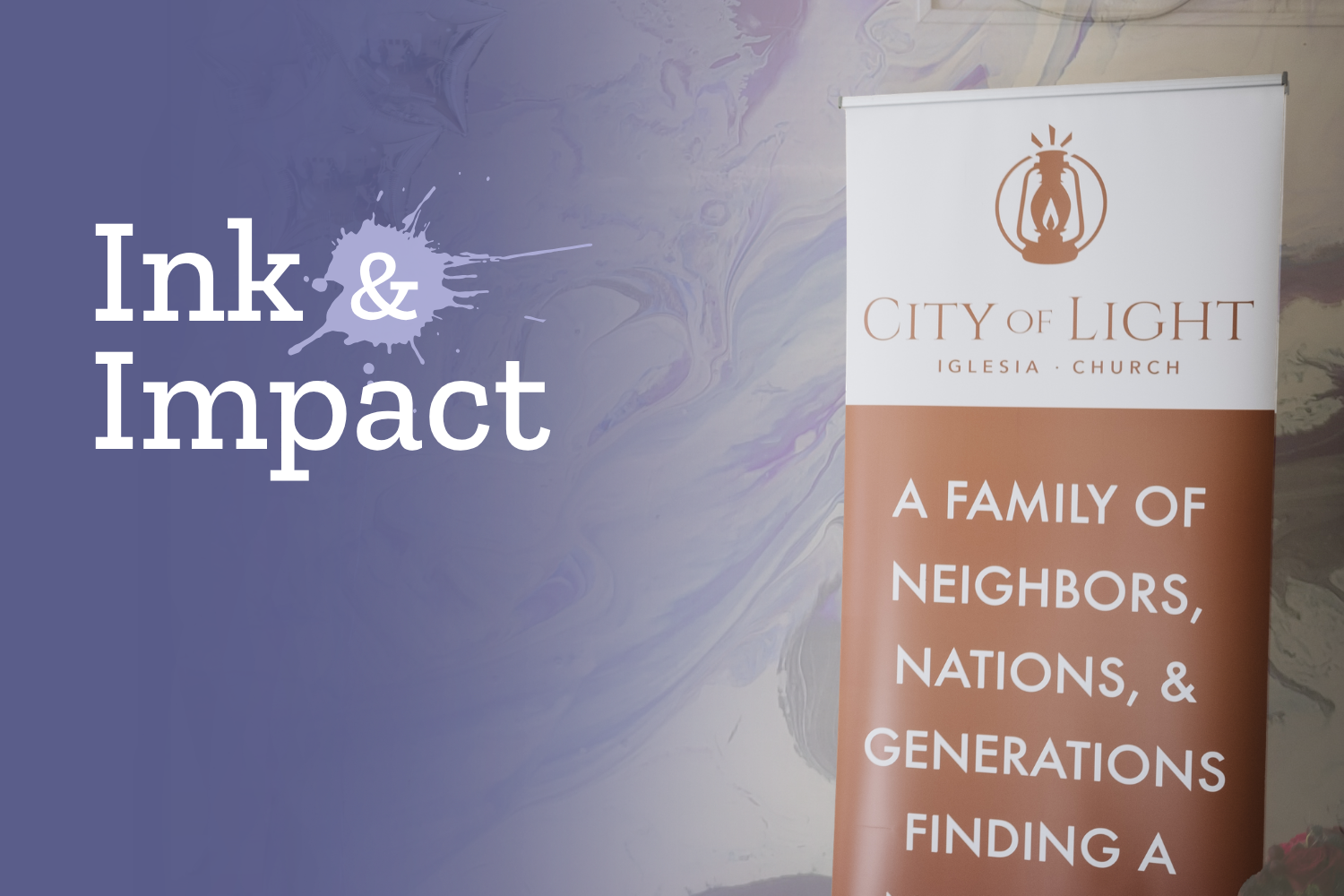
“[AJ clinics are] a solution not just that I can recommend, but a solution our church can help make possible,” said Trevor McMaken, pastor of City of Light Anglican Church in Aurora, Illinois.
Katrina Kessler, Senior Director of Operational Excellence at Administer Justice, believes the church is “the hope of the world,” and AJ clinics are one way to live out that truth.
“Opening a Gospel Justice Center is a tangible way for the church to have a presence in their community, meet a real need, and show God’s love and compassion,” she said.
Just as the government has a unique calling for justice, so does the church, as outlined in Micah 6:8. The church can partner alongside our neighbors, step into a messy and broken system, and help illuminate the path toward justice through empowerment models such as Administer Justice.
Anna Mares is from Pittsburgh, Pennsylvania and is a graduate of Wheaton College. She currently lives in Seville, Spain with her husband and teaches English. She is passionate about language, intercultural connection, and good food.
Graphic by Center for Public Justice