Three years after being released from state prison, 24-year-old Valentino Valdez, struggling to find treatment for mental health issues, was hospitalized for suicidal ideation. Cycling through detention facilities had strained his mental health, and the lack of standardized treatment exacerbated the difficulties he faced.
Incarcerated youth are at increased risk of many health conditions, yet medical care for this population is highly unstandardized. Care often varies between counties and is frequently used as a last resort rather than a foundation for long-term health. This lack of consistent care subjects youth to unequal protection against illness and disease, a troubling gap in a country grappling with high incarceration rates.
Designed Bodies Destined for Worship
Scripture gives us a framework for understanding why the health of every person, including those of incarcerated youth, matters. The creation narrative in Genesis highlights the intricacy and intentionality with which human bodies were crafted. Genesis 1:27 states that “God created man in his own image, in the image of God he created him; male and female he created them.” Genesis 2 further describes God fashioning Adam out of dust and breathing life into him, commissioning humanity to cultivate and care for creation as God intended.
This theme of embodiment continues in Revelation, where we are reminded that our bodies are not merely temporary vehicles but intricately crafted vessels that will be resurrected in the new earth. Revelation 21:3-4 describes a voice from the throne proclaiming that “‘God’s dwelling place is now among the people, and he will dwell with them. They will be his people, and God himself will be with them and be their God. ‘He will wipe every tear from their eyes. There will be no more death’ or mourning or crying or pain, for the old order of things has passed away.’”
This conviction becomes most vivid in the ministry of Jesus. Though the Gospel reframes Levitical codes that previously defined Israel’s standards for living as embodied beings in the presence of God, the importance of embodiment becomes even more profound in the ministry of Jesus. Where once the sick and diseased were required to remain isolated, Jesus crossed those boundaries repeatedly, touching lepers, healing the blind, restoring the broken. Disease no longer necessitates isolation, and righteousness is no longer limited to the Israelites. Instead, all are invited into the life-giving community of Christ as embodied heirs of the kingdom of heaven.
Broken Bodies Struggling to Thrive
Yet, living in a fallen world that awaits Jesus’ return means our bodies face deterioration and decay, especially for those who lack the financial and educational means to prevent disease. Incarcerated youth have sparse access to medical care, yet about 70% have at least one unmet health need. Most juvenile detention facilities utilize an “urgent care” model, focusing on immediate needs rather than promoting comprehensive, long-term health through access to routine health care.
The consequences are stark. Incarcerated youth have rates of sexually transmitted infections that are 10 times higher than those of their peers, are more likely to have experienced several kinds of trauma, are at increased risk of mental health conditions, and often experience poor dental health. Unaddressed mental health conditions can result in behaviors that draw juveniles deeper into the criminal justice system, while mistreatment of incarcerated youth, including the use of solitary confinement, can lead to the onset or worsening of both physical and mental health conditions.
Detention facilities often lack the infrastructure to provide adequate medical support. Even if facilities constructed treatment clinics and established systems to promote health, most youth would not be able to pay for care. By neglecting the need for sustained, holistic health care, the system leaves incarcerated children dependent on local governments to meet their physical needs. Prior to arrest, many individuals receive health care coverage through Medicaid, which is typically suspended at the time of arrest. The Medicaid Inmate Exclusion Policy prohibits the use of federal funds to pay for ambulatory services and medications for incarcerated individuals, shifting the financial burden from the federal government to county governments.
This, combined with the lack of standardized long-term health care plans, leaves an already vulnerable population even more susceptible to long-term health issues. County governments vary widely in their capacity to address health needs, and are poorly equipped to fill the gap between the sudden end of Medicaid coverage and incarcerated individuals’ abilities to pay for health care. The effects of such dysregulation can be especially catastrophic for incarcerated youths, who often have even fewer financial resources and cannot rely on consistent family support to cover medical costs.
Opportunities for Systemic Redemption that Promote Holistic Health Care
Jesus crossed boundaries to heal the sick and welcomed children whom others dismissed. That simple impulse should drive our institutional response, beginning with ensuring that incarcerated youth have standardized access to health care and means to pay for it.
A federal policy modeled after Norway’s approach requiring retention of welfare rights for incarcerated individuals could help address some of the most pressing gaps in correctional health care, particularly the absence of routine preventive health care and the lack of standardized costs. Norway’s model promotes long-term stability in health management and helps reduce massive barriers to long-term health among incarcerated individuals, especially youth. While the U.S. health care system differs significantly, the underlying principle, that incarceration should not strip individuals of access to basic medical care, is one that U.S. policy could reflect more fully.
The most immediate step toward that goal would be repealing or amending the Medicaid Inmate Exclusion Policy. More than 25% of states have already requested the federal government to waive this policy, recognizing that it creates a financial burden on county governments and leaves incarcerated individuals without reliable coverage. Several nonprofit organizations, including the National Alliance on Mental Illness, have also drafted letters to Congress to petition the policy to be amended or repealed.
A complementary step would be expanding policies that allow incarcerated individuals to access outside medical treatment. Wisconsin’s Huber Law, for example, allows inmates in county jails to leave the facility for medical treatment, family responsibilities, and employment. While limited in scope, applying to those convicted of minor crimes, it points toward a model that other states could adapt, one that prioritizes access to health care rather than restricting it.
Civil society has an equally vital role to play. Grassroots organizations can support incarcerated youth by working alongside government to raise awareness about existing health care policy and advocate for policy changes that promote the long-term health of incarcerated individuals. Community Oriented Correctional Health Services, for example, helps communities improve health care in local correctional facilities and identifies policies that help authorities better meet the needs of those in their care. The National Commission on Correctional Health Care creates health care standards in correctional facilities and helps bridge the gap between clinical settings and correctional facilities.
Health care workers and community members with a passion for improving the quality of life in correctional facilities should also consider volunteering time and resources to serve the health care needs of incarcerated communities. There are currently few organized efforts to mobilize health care workers to volunteer at correctional facilities, and closing that gap could both alleviate the economic burden associated with health care and better educate incarcerated individuals on how to care for their health.
If Valentino Valdez had had consistent access to mental health care, his hospitalization may well have been prevented. He is not an outlier. He is a portrait of what systemic neglect looks like in a person’s life. To prevent such outcomes both for those currently in detention and for those reintegrating into society, institutions and local governments should advocate for laws that address the unregulated nature of health care during incarceration.
Communities can act by joining letter-writing and petition campaigns that advocate for standardized access to care, as well as by mobilizing health care workers to engage with individuals facing health care challenges in correctional facilities. For youth cycling through detention with unmet health needs, abundance remains out of reach. Continuing to neglect their needs is a disservice to the very Savior who came so that people “may have life and have it abundantly” (John 10:10).
Orli Strickman is a student at Wheaton College studying biology, chemistry, and psychology. She is passionate about improving pediatric health care, especially for underserved communities.
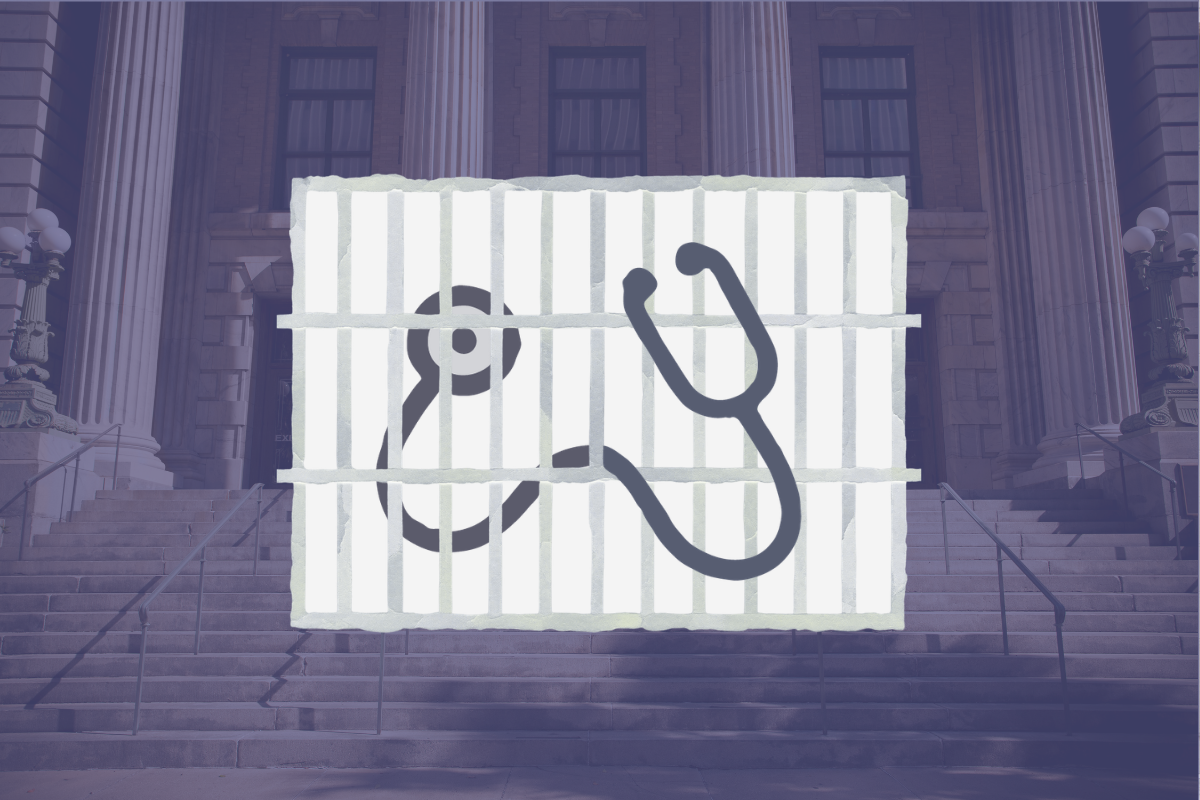
Graphic by Center for Public Justice / Source Photo by Pgiam from Getty Images Signature, accessed with Canva Pro.