Escalating Disasters and FEMA Uncertainty
“I have not been affected, why should I care?”, “I care about people before I worry about plants and animals.” These are the words of irritation and apathy toward environmental policy. Climate news and subsequent political implications generate a myriad of responses — frustration at partisan disagreement, suspicion toward those calling for action, and confusion about all the information available. Notably, a third of Americans express annoyance that these issues occupy so much attention.
But what about when disaster strikes?
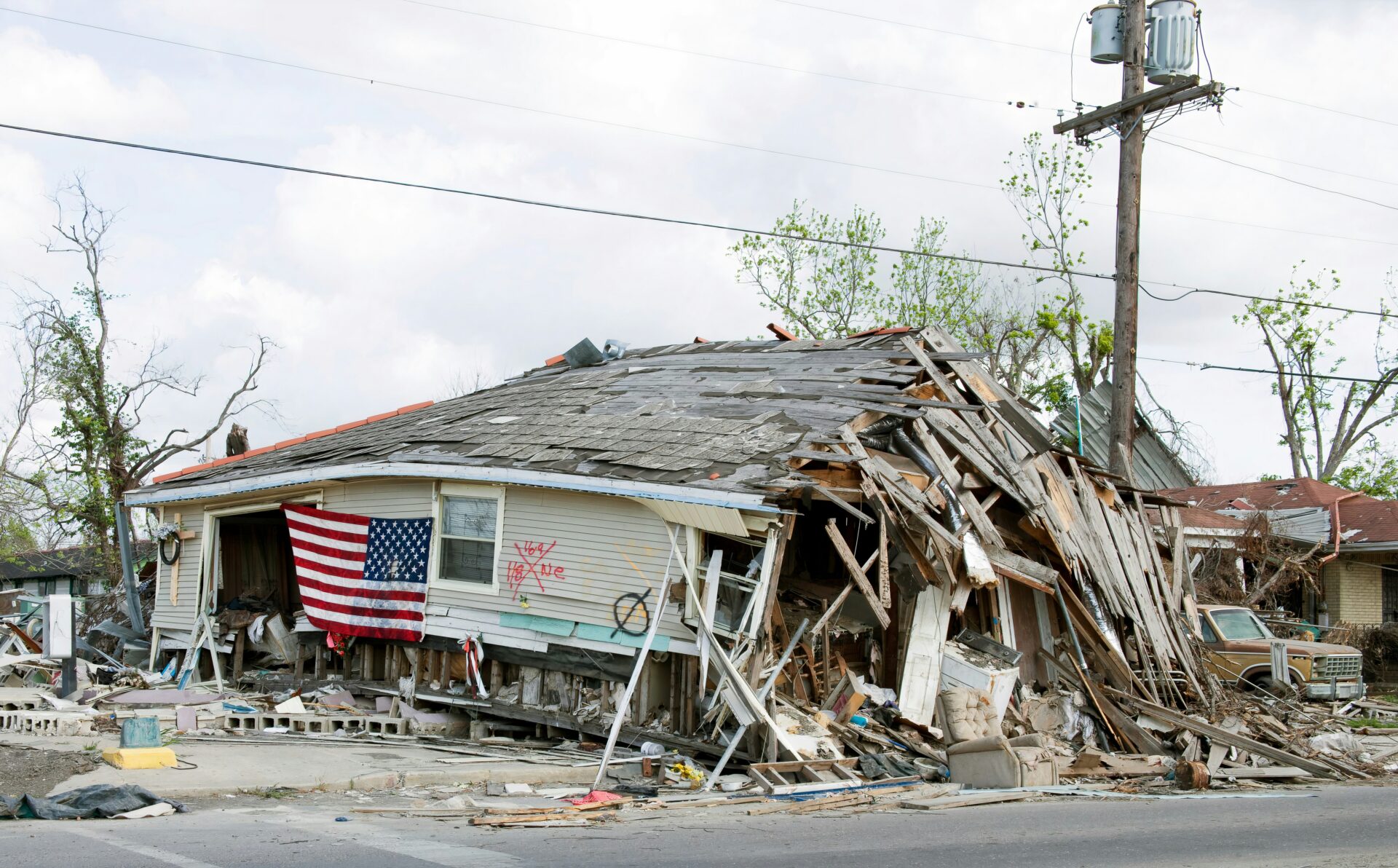
In recent years, the number of devastating natural disasters have skyrocketed. National Centers for Environmental Information (NCEI) reports an annual average of nine climate and weather disasters causing over a billion dollars in damage in the US for 1980–2024. The annual average for 2020-2024 is 23 events (both are CPI-adjusted). 27 disasters occurred in 2024 alone, including Hurricane Helene, which killed over 230 people and caused approximately 90 billion dollars worth of damage across the Carolinas, Florida, Georgia, Tennessee, and Virginia.
Natural disasters have not declined in 2025. Notably the July Central Texas flash floods have killed over 130 people by the date of this writing, including 27 girls and staffers of Camp Mystic, a private Christian summer camp in Kerr County, Texas.
The precarious state of the Federal Emergency Management Agency (FEMA) exacerbates worries about disaster consequences. FEMA is the agency that coordinates the federal response to disasters that receive a Presidential disaster declaration, providing federal resources to augment state emergency responses. Secretary of Homeland Security Kristi Noem currently oversees the agency, and has different strategies for disaster relief policy than many of her predecessors. “We are eliminating FEMA,” she said in a March 2025 cabinet meeting. She instead favored state governments solely managing disaster relief. In the late spring of 2025, FEMA suffered severe staffing and funding cuts. The Trump Administration has since shifted the policy strategy from abolishing FEMA to reforming the agency, in light of natural disasters like the summer 2025 floods in Central Texas. Still, the turbulent state of federal disaster relief leaves underequipped state governments and their denizens, as well as climate scientists, uneasy.
A Faith Perspective on Natural Disasters
In the beginning, all of humanity and Creation was in perfect relationship with God. Through the Fall, humanity chose against God, staining all Creation with sin. Natural disasters and the policies responding to them remind us of the pervasive nature of sin and the anguish of living in a world “groaning” in pain, eagerly awaiting complete reconciliation to its Creator (Romans 8:22).
Yet, through Christ’s death and resurrection, the process of restoration has already begun. Consider the Apostle Paul’s words: “For God was pleased to have all his fullness dwell in him, and through him to reconcile to himself all things, whether things on earth or things in heaven, by making peace through his blood, shed on the cross” (Col. 1:19-20). Redemption is available to us, but God’s complete reconciliation to Creation will not be fulfilled until Christ’s return. As former CPJ president and executive director James Skillen has said, we are living in the time of God’s patience and mercy. Natural disasters remind us that we do not have absolute control over our lives, and our restoration derives only from God. Nevertheless, we also participate in the story of redemption as vessels for God’s grace and mercy — such as in disaster response.
A Public Justice Framework for Disaster Response
As outlined by the Center for Public Justice, public justice involves a collaborative effort to uphold human flourishing. Government must recognize its limits, promoting the efforts of other institutions and associations, such as nonprofits, nongovernmental organizations (NGOs), and even faith communities. Still, much good proceeds from the government, including authorization to “restrain sin through law and provide lawful retribution for injustice.” This restraint of sin and its effects includes the damage caused from the corruption of Creation, such as disasters.
In its most effective form, disaster relief embodies this vision for public justice. Consider the litany of collaborators who responded to Hurricane Helene last year. Government actors, such as FEMA, the Red Cross, and state disaster agencies, stewarded on-ground assistance and channeled billions of dollars into affected communities. The federal government and North Carolina directed approximately $5.95 billion alone into western North Carolina communities. In addition to substantial financial assistance, FEMA coordinated logistical support, search and rescue teams, sheltering and housing, commissioned military assistance, and much more, almost entirely in partnership with other state agencies and organizations. Numerous faith based organizations (FBOs) and Christian relief groups, such as Samaritan’s Purse, Send Relief, and Convoy of Hope, partnered with local churches and stretched their capacity to aid those affected. Notably, FEMA itself partners with FBOs and faith communities. Such collaboration was critical for providing sustained support to local communities throughout North Carolina.
Non-federal relief assistance continues to play a crucial role amid FEMA uncertainty. Faith-based relief groups and denominations, for instance, offer extensive food, water, and supplies needs in addition to spiritual and emotional support in Texas. Still, in light of FEMA’s tentative state, a critical leg in implementing public justice seems unsure.
Policy Implications
The human cost of recent disasters and their management reveals a few clear takeaways. First, climate change exacerbates the impact of natural disasters and any action dedicated to mitigating its effects saves lives. In general, disaster policy and prevention remains intertwined with environmental policy, and understanding this intersection engenders a thriving human ecosystem on this planet. Those of us who follow Christ can engage with environmental policy and climate change advocacy as a way to protect and serve our neighbors.
Second, readers should support FEMA’s existence and federal disaster relief. Recent changes to FEMA continue to draw criticism in light of slow and insufficient responses to the Texas flooding. These controversial decisions include cuts to call center contracts and new requirements that involve the DHS Secretary’s review and approval of all new expenses over $100,000 (including search-and-rescue teams). As of the writing of this piece, twenty states are suing FEMA for cutting the Building Resilient Infrastructure and Communities grant program, which helps communities guard against damage from natural disasters.
FEMA is not a perfect institution, but it plays a crucial role in the collaborative framework of disaster relief, as the Council on Strategic Risks notes:
“The future of FEMA should be one of modernization, strategic reform, and renewed investment, not chaotic dismantling, especially at a time of escalating climate, disaster, and security risks.”
We must better invest in and staff FEMA, not defund and downsize it. FEMA’s “chaotic dismantlement” might continue, or the Agency could be eliminated entirely. If so, acknowledging and investing in the other disaster relief collaborators, like state agencies and FBOs, will become absolutely necessary to administer justice during a catastrophe.
Amid the brokenness of Creation, collective disaster relief transcends partisan belief and points heavenward to a restored Creation. As Christians, we are called to faithfully steward God’s created world. Supporting this collaboration between FEMA and civil society provides a beautiful, comprehensive opportunity to do just that.
Grant Dutro was the Summer 2025 Communications Intern at the Center for Public Justice. He is currently pursuing a master’s degree in theological studies at Vanderbilt Divinity School and is part of the 2025-2026 cohort of Christianity Today’s Young Storytellers Fellowship.
Photo by Carol M. Highsmith, Library of Congress on Unsplash.