A recent forum convened by the Brookings Institution and Wake Forest University School of Divinity brought together legal scholars and public leaders to examine how the Trump administration has approached religious freedom through executive action, administrative policy, and public rhetoric. Rather than focusing narrowly on individual conscience claims, the conversation also focused on institutional religious freedom—how religious organizations, congregations, nonprofits, universities, and civic institutions experience freedom or limitation in the present governing moment.
Incremental Executive Action and Real Continuity
Christopher Lund, professor of law at Wayne State University, began by offering a measured assessment of the Trump administration’s executive actions touching religion. “Generally speaking, these executive orders have been incremental and somewhat symbolic rather than transformative,” Lund said, stressing that many reflect continuity across administrations rather than dramatic legal innovation.
Several initiatives, he noted, closely resemble long-standing policy. Revised guidance on religious expression in the federal workplace “is not really all that different from the rules put into place in 1997 by the Clinton administration.” Accommodations such as allowing telework for religious reasons fall squarely within existing statutory frameworks.
Lund also addressed the administration’s decision not to enforce the Johnson Amendment against churches whose clergy endorse political candidates. While controversial, he described the move as formalizing a practice already in place. “Non-enforcement of the rule has been the dominant trend for decades,” he said. “The Trump administration just sort of made it official.”
From an institutional perspective, these actions suggest a degree of legal stability. They do not substantially alter the regulatory landscape within which religious institutions operate, nor do they upend established doctrine.
Areas of Constructive Institutional Protection
Stephanie Barclay, professor of law at Georgetown Law and faculty co-director of the Georgetown Center for the Constitution, emphasized that several Trump administration actions reflect recent Supreme Court precedent strengthening institutional religious freedom, particularly for organizations that partner with government.
She pointed to executive actions clarifying that religious organizations should not be excluded from federal contracting or grant programs because of their religious character. “That’s particularly important given how much charitable work government contractors often do,” Barclay said, noting that many faith-based organizations serve vulnerable populations through public-private partnerships.
Barclay also highlighted foster care and adoption as an area of constructive continuity. Executive actions affirming the inclusion of religious foster care agencies align with the Supreme Court’s unanimous decision in Fulton v. City of Philadelphia, which protected a Catholic agency’s ability to participate in a city foster care program.
“These are both areas where the Supreme Court recently has ruled to protect these sorts of groups,” Barclay said. In her view, the administration’s posture here reflects doctrinal alignment rather than ideological departure.
Lund similarly acknowledged that some executive actions “are good, although some of them are rather small,” emphasizing that institutional religious freedom often advances through modest but concrete accommodations rather than sweeping proclamations.
Antisemitism, Enforcement, and Institutional Accountability
Several panelists identified the administration’s attention to antisemitism as a significant—if contested—development, particularly where it has involved institutional accountability.
Barclay discussed litigation involving the University of California, Los Angeles, where Jewish students alleged exclusion from parts of campus during protests. Referencing judicial findings, she noted that Jewish students were “excluded from portions of the UCLA campus because they refused to denounce their faith.” UCLA ultimately entered into a substantial settlement.
Following that resolution, the federal government signaled its willingness to withhold significant funding if corrective measures were not taken. “Right now, the Trump administration has threatened specifically $339 million,” Barclay said. “That’s a big stick.”
Panelists broadly agreed that institutions have a legal obligation to protect religious minorities from exclusion and harassment, and that civil rights enforcement remains an appropriate tool when those obligations are unmet. At the same time, Lund cautioned that while antisemitism is a real and serious concern, the administration has framed its response narrowly and in a partisan way—focusing primarily on left-leaning academic spaces while paying less attention to antisemitism appearing in far-right movements, online spaces, and some religious and political communities.
Audience members and panelists alike noted that Islamophobia and other forms of religious hostility have not received comparable institutional attention, raising questions about whether religious freedom enforcement is being applied evenly across communities.
Government Speech and Institutional Authority
Where the panel expressed sharper concern was in the realm of government speech—particularly when executive officials speak in explicitly sectarian terms.
Marty Lederman, professor from practice at Georgetown University Law Center, described recent statements by federal agencies declaring that Americans “share a nation and a savior” as “a major change and a pretty strikingly radical shift for the federal government.”
“The government is simply incapable of being a judge of religious truth,” Lederman said. “When the government says that Jesus Christ is our Lord and Savior, that’s just factually inaccurate. I can tell you he’s not my Lord and Savior.” The constitutional problem, he emphasized, is institutional rather than personal: “The government ought not to be the one assessing that and announcing whether we have one Lord and Savior for all people in America.”
Lederman argued that even under the Supreme Court’s narrowed Establishment Clause doctrine, government endorsement of sectarian doctrine threatens both religious freedom and religion itself by entangling faith with state authority.
Lund raised parallel concerns about hierarchy, particularly within the military. Referring to Christian worship services held at the Pentagon, he warned that even nominally voluntary events can carry implicit pressure. “If your boss says, ‘I’m going to this religious service,’ are you going?” he asked.Barclay offered a more restrained constitutional reading, emphasizing that after the Court abandons the Lemon test, Establishment Clause analysis focuses on specific “hallmarks” of establishment, such as coercion or compulsory participation. Still, she agreed that coercion within hierarchical institutions would raise serious concerns. “If someone said, ‘It was clear to me that if I didn’t participate, I wasn’t going to advance in my job,’” she said, “that’s a different ballgame.”
Immigration Enforcement and Religious Institutions
The most sustained institutional concern involved immigration enforcement and its effects on religious communities.
Lederman focused on the administration’s rescission of long-standing policies discouraging immigration enforcement at “sensitive locations,” including houses of worship. “This policy has been in place for several decades,” he said, describing it as a strong presumption designed to prevent deterrence from essential civic and religious activity.
“The Trump administration is very strongly deterring many people—both people who are removable and those who aren’t—from appearing in various places of this sort,” Lederman said. “So it’s having the effect that the announcement was supposed to have: chilling their religious activity.”
While acknowledging the legal complexity of challenges to the policy, Lederman noted a tension that recurred throughout the discussion: the administration has advocated expansive religious exemptions in some contexts while resisting them where enforcement priorities are strongest.
Barclay added that similar tensions existed under previous administrations, particularly in cases involving humanitarian aid to migrants. Still, she agreed that the institutional impact on churches and ministries remains significant and unresolved.
Native Religious Institutions and Apache Stronghold
The discussion broadened further when audience members raised Apache Stronghold v. United States, involving plans to transfer federal land containing Oak Flat—a sacred site for Apache religious practice—to a mining company.
Barclay described the case as a direct test of whether federal law protects Native religious institutions on equal footing with other faith traditions. Justice Neil Gorsuch’s dissent from the denial of certiorari, joined by Justice Clarence Thomas, argued that destroying a sacred site effectively prohibits religious exercise.
“This was a petition asking the government to protect the ability of Apache petitioners to have their religious exercise protected under statutes like RFRA on the same basis as other religious denominations,” Barclay said. While acknowledging that the Court’s refusal to hear the case was not surprising given property doctrine, she described the outcome as deeply disappointing.
For several panelists, Apache Stronghold illustrated the unevenness of institutional religious freedom protections—particularly for Native American communities whose sacred practices are inseparable from specific lands.
Conclusion
As the conversation closed, panelists repeatedly returned to concerns that extended beyond doctrine alone. Several speakers emphasized that legal rules, even when formally sound, cannot resolve the effects of rhetoric, enforcement priorities, and public trust on religious and civic life.
Walker warned that the language used by governing officials can have a chilling effect, discouraging participation in religious and civic institutions even where legal boundaries are not formally crossed.
Lederman similarly stressed that no branch of government can resolve these tensions on its own, urging continued civic engagement, decency, and tolerance as essential to sustaining a pluralistic democracy.
The forum did not reach a single judgment on the Trump administration’s record. Instead, it highlighted an unresolved tension running through contemporary religious freedom debates: whether constitutional protections will be applied broadly and evenly across traditions, or unevenly through rhetoric, selective enforcement, and political power.
Chelsea Langston Bombino is a Center for Public Justice Fellow.
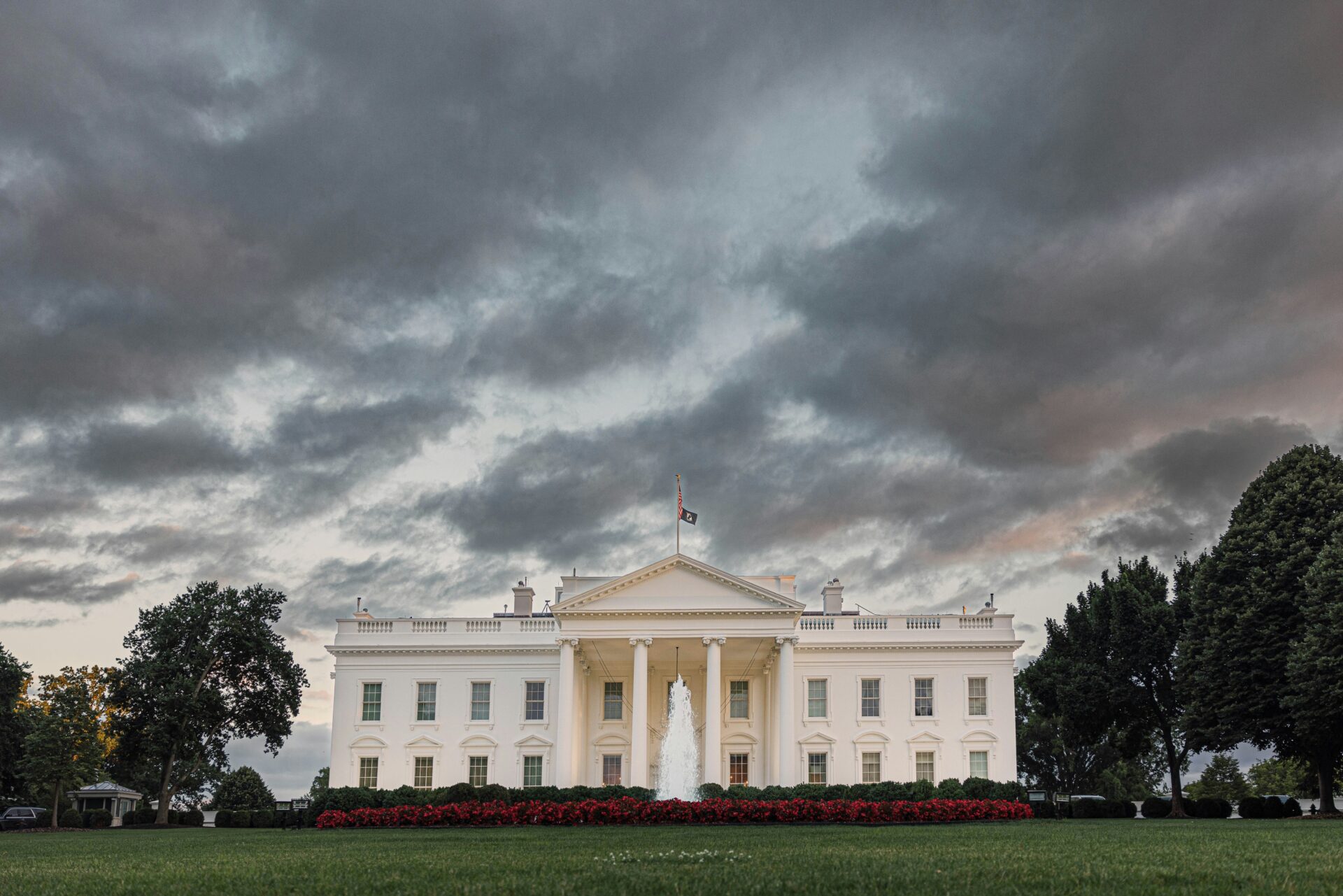
Photo by Sunira Moses on Unsplash.