Since June 2025, the Religious Liberty Commission (RLC) has hosted a series of hearings exploring the past, present, and future of religious liberty in America. While these hearings have largely reflected agreement among panelists, the Commission’s fifth hearing—focused on antisemitism—revealed deeper disagreements, particularly around whether anti-Zionism should be understood as antisemitism.
These disagreements raise an important and longstanding question: What role, if any, should government play in resolving religious or doctrinal disputes? Answering this question requires clarity about the proper role of government itself.
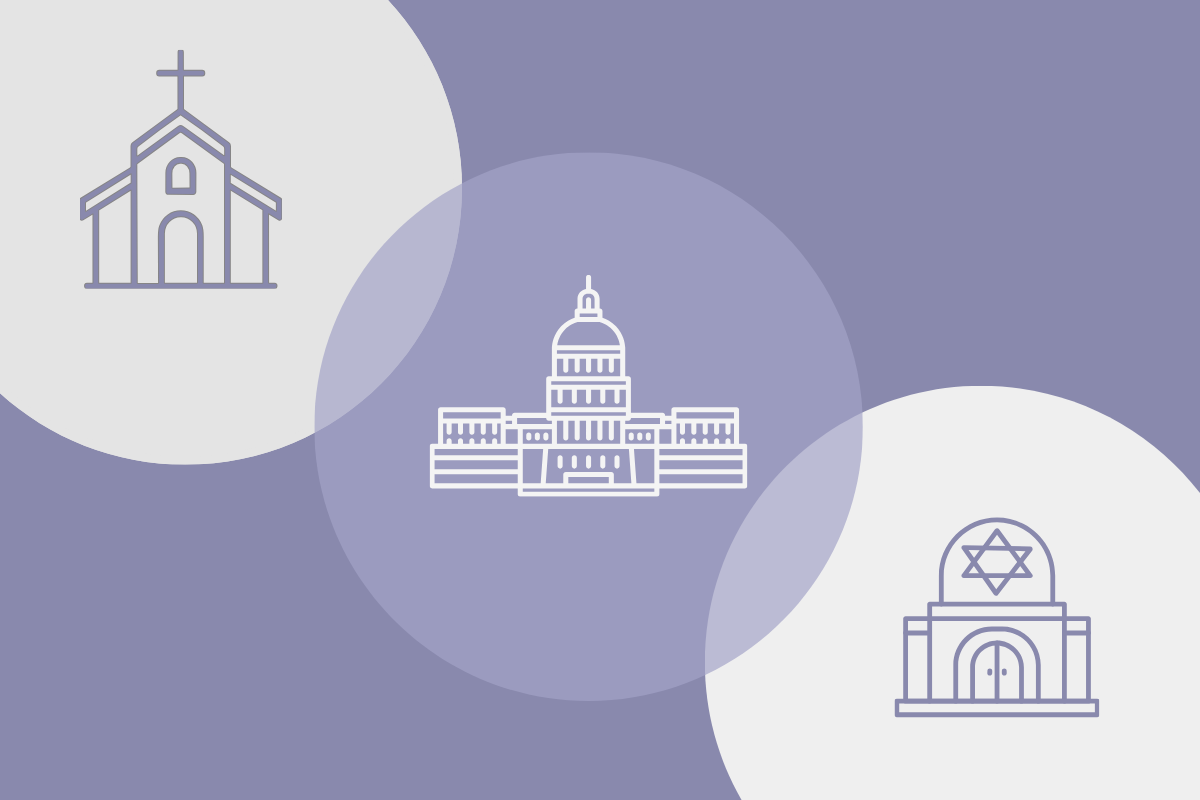
From a public justice perspective, government is responsible for upholding justice for all people and institutions in society. This includes protecting the freedom of individuals and institutions to practice their religion, whether privately or publicly. At the same time, government authority is limited. It must respect the distinct responsibilities of other institutions—such as churches and religious communities—and should not attempt to define or settle matters of religious doctrine.
This distinction—between resolving disputes involving religion and deciding religious truth—is critical. Courts may, in some cases, adjudicate disputes that arise within a religious context. But they are not authorized to determine what a religion teaches or what its doctrines require.
The U.S. Supreme Court addressed this distinction in Watson v. Jones (1871), where it identified three types of religious disputes that may come before courts. First, courts may resolve disputes involving property or funds where religious terms are part of a legal agreement. Second, in independent religious organizations, disputes may be resolved according to the group’s own governance structure or majority decision. Third, when disputes arise within hierarchical religious bodies, courts must defer to the decisions of the highest authority within that religious organization.
Legal scholars have further clarified that while courts should generally take a “hands-off” approach to religious doctrine, they may sometimes need to interpret religious concepts when resolving civil disputes between parties who have voluntarily agreed to operate within a religious framework. Even in these cases, however, courts are not determining doctrine—they are applying agreed-upon standards to resolve a dispute.
This framework helps clarify the limits of government authority. The state may settle disputes involving religious actors when necessary to uphold justice between parties. But it may not define religious doctrine or enforce theological conclusions. To do so would exceed its proper role and risk infringing on religious freedom.
At the same time, government does have a responsibility to protect the common good. Under current legal standards, neutral and generally applicable laws may regulate religious activity. However, when government action substantially burdens religious exercise, it must satisfy strict scrutiny by demonstrating a compelling interest.
This raises an important question in the context of the RLC’s discussion: when does religiously motivated conduct cross the line into unlawful discrimination? Government has a legitimate role in addressing discrimination that violates the law. But this role is limited to determining whether conduct is unlawful—not whether a particular belief or doctrine is correct.The debate over antisemitism and anti-Zionism illustrates this tension. If anti-Zionism is understood as a form of unlawful discrimination against Jewish people, then government may have grounds to intervene. But if it reflects a political or theological position that does not meet the legal definition of discrimination, then it falls outside the scope of government authority. In either case, government is not responsible for determining whether a particular theological position is valid, only whether unlawful discrimination has occurred.
This distinction is especially important in a pluralistic society, where religious communities hold diverse and sometimes conflicting beliefs. If government were to take on the role of resolving doctrinal disagreements, it would risk overstepping its authority and undermining the very religious freedom it is meant to protect.
A public justice framework provides a way forward. It affirms that government has an essential role in maintaining justice and protecting individuals from harm, while also recognizing that religious communities must remain free to define their own beliefs and practices. Maintaining this balance is essential to preserving both religious freedom and a healthy civic order.
Melissa Mercedes was a Policy Associate at the Center for Public Justice from 2025-2026.
Girien R. Salazar, Ph.D. is the Director of Faith-Based Policy and Research at the Center for Public Justice.
Image by Center for Public Justice