
In 2025, across the courts, Congress, and federal agencies, questions of institutional religious freedoms, about how faith-based organizations (FBOs) participate in public life, have surfaced repeatedly. For those of us committed to a vision of public justice grounded in principled pluralism, 2025 offered both encouraging developments and cautionary lessons for churches, schools, charities, and other religiously motivated organizations that carry out their public missions in accordance with their deepest convictions.
Judicial Developments
Two cases in particular drew attention to how institutional religious identity functions in civic and public spheres. In Catholic Charities Bureau v. Wisconsin, the Supreme Court reaffirmed that religious organizations do not lose their religious character when they serve the public, and neither must faith-based service agencies conform to narrow or state-defined conceptions of “religious activity” to qualify for a religious tax exemption under state law. In response to the Court’s 9-0 ruling reversing the Wisconsin Supreme Court’s previous decision, Wisconsin, on December 15, formally recognized that Catholic Charities “is eligible for the religious purposes exemption.” Serving others outside of one’s own faith—when motivated by faith—is not a departure from religious identity but often the very indication of an organization’s religious conviction.
Similarly, Mahmoud v. Taylor drew attention to the family as a, if not the most, formative religious institution. While the case largely centered on parental opt-out rights in education, broader implications underscored that normative instruction is religious instruction and that the requirement of parents to send their children to public or private K-12 schools does not relinquish their role in determining their child’s religious upbringing. Together, these cases reflected a judicial awareness that faith is indeed embodied institutionally—through families and organizations—and that constitutional protections must account for this reality.
Executive Actions and Commissions
In 2025, executive action played a central role in shaping the national conversation around religious freedom. A series of presidential executive orders and directives positioned religious liberty around recent and prominent accounts of religious discrimination against Christians and Jews, and on removing barriers to FBOs in partnering with the government.
In May, President Donald Trump launched the Religious Liberty Commission (RLC), tasked with examining threats to religious liberty and advising on strategies to preserve it for future generations. To date, the RLC has hosted four public hearings. The first sought to frame religious freedom as a foundational feature of America’s history and tradition, demonstrate religion’s public value, and surface some of the most pressing religious freedom issues impacting the U.S. While some commissioners signaled their own Christian nationalist sympathies, the majority—along with all witnesses—expressed genuine appreciation for America’s religious pluralism. The second and third hearings centered on religious liberty in education, the second hearing receiving the most public attention due to President Trump’s attendance. Students, parents, and faith leaders shared accounts of burdens and restrictions of their religious expression in public schools, and panel experts and witnesses addressed the autonomy of private, faith-based educational institutions impacted by overreaching accreditation and nondiscrimination policies and funding mechanisms. The most recent hearing examined religious liberty in the military and included voices from past and current servicemembers, chaplains, and military advocates. The RLC is expected to submit its comprehensive report and recommendations to the President, White House Faith Office, and the Domestic Policy Council before July 4, 2026.
Early in 2025, the President’s creation of a Task Force to Eradicate Anti-Christian Bias introduced a more partisan and selective framing of religious liberty, as the Executive Order particularly responds to “Biden”-era activity and pits it as hostility specifically against the Christian faith. The Ethics and Public Policy Center has comprehensive work documenting the ways the previous administration demonstrated anti-Christian bias. One meeting of the Task Force has been convened to date, in which it highlighted the stories of Christian persons and organizations who felt targeted by the previous administration. The remedying of religious discrimination is a worthy pursuit; however, the protection and advancement of religious freedom can and should be articulated as a shared right, even as an initiative elevates the necessary concerns of a particular religious tradition.
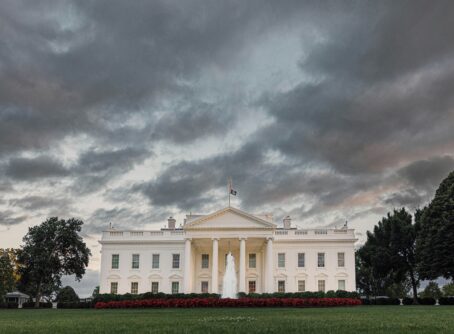
Most prominently, the establishment of the White House Faith Office (WHFO) reaffirmed a now 25-year bipartisan tradition of recognizing FBOs as meaningful partners in public life. Building on earlier iterations under Presidents George W. Bush, Barack Obama, Joe Biden, and President Trump’s first term, the WHFO is intended to serve as a key touchpoint for the administration to interact with, support, protect, and coordinate with faith-based and neighborhood organizations. Housed in the Domestic Policy Council, the WHFO has a mandate to strengthen partnerships between the government and faith-based groups focused on solving social issues. Its leaders, Pastor Paula White and Jenny Korn, serve on the Religious Liberty Commission and the Task Force to Eradicate Anti-Christian Bias, and in this way contribute to recommendations to the administration and agency directors. The majority of their public-facing work has been in hosting faith leaders for WHFO briefings, which, according to various social media profiles, have turned into impromptu prayer and worship meetings. For some, this is a sign that “faith is returning to the White House,” while others on the outside looking in desire to understand more about the concrete policy and religious priorities of the WHFO.
Beyond commissions and advisory bodies, 2025 also saw executive action reshape the practical conditions under which faith-based institutions partner with government. The establishment of the Department of Government Efficiency (DOGE) introduced a new and swift administrative posture emphasizing consolidation, cost reduction, and programmatic review across federal agencies. While the public and FBOs largely welcome the long-overdue federal efficiency and accountability measure, DOGE’s implementation also had profound consequences for global humanitarian efforts and refugee resettlement programs—sectors where religious organizations have long served as trusted partners.
Several faith-based humanitarian and refugee resettlement agencies reported abrupt funding disruptions, delayed reimbursements, and shifting compliance expectations. In response, some religious denominations and affiliated service organizations began reassessing—and in some cases suspending—decades-long partnerships with the federal government. These decisions were not made lightly. They reflected deep institutional questions about mission fidelity, financial viability, and moral responsibility to vulnerable populations in our global community.
From a public justice perspective, the global health changes raise concerns not only about service delivery, but about institutional religious freedom itself. Religious liberty is not limited to the right to believe or worship; it also includes the freedom of religious institutions to organize their work in accordance with their convictions and callings. Some of the work—refugee resettlement and international adoption, for example—FBOs cannot perform without the government. When agency restructuring interrupts the conditions under which FBOs have long served, the result may chill their participation in public life, particularly in areas of humanitarian response where religious actors are often among the most experienced and trusted providers.
Legislative and Regulatory Trends: Guidance, Grants, and the Everyday Governance of Faith-Based Organizations
While Supreme Court cases and executive actions often dominate discussions surrounding religious freedom, there is public policy affecting FBOs in 2025 through regulatory mechanisms. For example, in July, the Small Business Administration (SBA) repealed the exclusion of religious organizations from applying for disaster relief loans, officially expanding access to SBA resources for religious nonprofit and for-profit organizations, and established a new Center for Faith, joining other government agencies such as the Department of Education and the Department of Commerce, with faith centers established in 2001 under the Bush administration and 2009 under the Obama administration, respectively.
Since February, two agency-level mechanisms in particular have affected institutional religious freedoms: Official guidance and the design of federal Notices of Funding Opportunity (NOFOs) from the Department of Justice (DOJ) and Department of Homeland Security (DHS). These instruments rarely make headlines, yet they significantly shape whether and how religious institutions can participate in public programs.
In July, the DOJ issued a memo on unlawful discrimination in employment and contracting, intending to target Diversity, Equity, and Inclusion (“DEI”) programs with a broad brush and put institutions (faith-based or not) on notice regarding how the administration would likely interpret and enforce nondiscrimination law going forward. The DOJ’s memo briefly acknowledged that narrow exceptions exist, such as in cases where federal law expressly permits race-based remedies for specific, documented acts of past discrimination and in specialized contexts, but failed to articulate any religious exemptions for FBOs, such as those in Title VII and Title IX, for example.
In April, DHS issued its Fiscal Year (FY) 2025 Standard Terms and Conditions, which apply to new and continuation of federal awards in the fiscal year. The most striking and newest additions to the terms and conditions are what can be fairly described as DHS/Immigration and Customs Enforcement (ICE) cooperation and no-benefit-to-illegal-immigrant requirements.
The first agency we noticed to apply DHS’s new terms was the Department of Justice, particularly the Office of Juvenile Justice and Delinquency Prevention, in their FY25 National Mentoring Programs NOFOs. Some FBOs we talked to play essential roles in mentoring teens and have long served marginalized communities out of deep religious conviction. They admitted to having to comb through their grant applications to ensure they struck words such as “marginalized” and “less fortunate.” They questioned whether they could reconcile the grant requirements with their sincere religious convictions and practices of welcoming and caring for anyone who seeks help, not turning away immigrants seeking shelter, food, spiritual counseling, or sacraments.
We have heard from faith groups that the presence of many new grant requirements in NOFOs is not only causing a chilling effect on FBO participation in federally funded programs but also causing confusion amongst those eager to participate. One FBO came to us after hearing another organization communicate these requirements in the FY 2025 Nonprofit Security Grant Program (NSGP)–a program highly utilized by FBOs, including Jewish and Christian houses of worship. If you lead a house of worship at high risk of terrorist attack, then FEMA may award you funds to make physical security enhancements to bolster the safety of your congregants. It would be unreasonable to think that, given the new DHS terms and conditions, your church is now required to check the immigration status of attendees or not allow illegal immigrants from your community to receive sacraments or prayer on days of worship.
Rightfully, the FY 2025 NSGP explicitly exempts recipients of this program from the DHS/ICE cooperation and no-benefit-to-illegal-immigrant requirements. Nonetheless, the broad and varying application of DOJ and DHS guidance by agencies has resulted in confusion for FBOs who are aware of its language. Additionally, many (though not all) state administrative agencies, which are charged with administering the NSGP at the state level, have directly and indirectly communicated the presence of these requirements in their state-level correspondence. Clarity is essential for FBOs as they navigate federal funding. They need to know how grant eligibility guidelines could pose obstacles to their inherently religious work.
We support the current administration’s priority to promote federal partnerships with FBOs in addressing social problems that such organizations can often address more effectively than the government alone. We also encourage the government to review the religious-freedom concerns these organizations have raised regarding requirements that appear across agencies and in NOFOs promoted to FBOs. To facilitate effective government-FBO partnerships, public officials should consider the religious convictions that motivate these organizations’ charitable work and provide as much clarity as possible through agency guidance and NOFOs.
Looking Ahead to 2026: Engagement and Reflection
After a 2025 of growing coalitions, policy research, targeted advocacy, and fruitful dialogue, the Faith-Based Policy and Research (FBPR) team welcomes the new year with hope for what is to come. As we turn toward 2026, several developments have begun to shape our work, from spearheading and participating in more public-facing policy positions to expanding civic education centered in public justice that benefits a myriad of faith communities.
Much of the FBPR team’s engagement this year will occur in relation to the regulatory process. Most immediately, we are preparing a response to the Department of Labor’s request for comments on how to address barriers affecting faith organizations, inviting public input on how the Department can better facilitate equitable participation of FBOs in DOL-funded or regulated programs. Recently, other federal departments have released Notices of Proposed Rulemaking with implications for institutional religious freedom issues, to which we will respond as needed and hopefully in a broad coalition.
Our team also senses a need for practical federal guidance to public officials on how to consistently apply the Religious Freedom Restoration Act (RFRA) framework in the development and outworking of agency programs and initiatives. Although some guidelines exist to direct agencies in their application of RFRA, it would be a benefit to federal faith-based initiatives, no matter the administration, if agency faith directors were equipped to review programs and funding opportunities for RFRA compliance or possible violations. This would give both agencies and FBOs confidence that the religious freedom rights of institutions and beneficiaries are well protected.
At a time of a rise in school choice policies and favorability across the U.S., we also sense a need to develop a biblically grounded and principled pluralist response to guide how we should think about education today, along with the roles that families and other spheres of society play in shaping education as a public good. Mahmoud v. Taylor reminds us that the discussion of education involves more than just individual parental rights but also the role that institutions play in forming, teaching, and shaping values and meaning in life. Can public life make room for difference, reverence, and the freedom for children to be formed by something other than secular schools? We believe so.
Finally, as has been the custom for the previous 20 plus years, in 2025, the Coalition to Preserve Religious Freedom (CPRF) convened faith leaders, legal experts, and policy advocates of distinct and diverse core religious missions to wrestle with implications to religious freedoms through many regulatory and statutory developments, arguments and decisions of high-profile court cases, experiences of FBOs, and advocacy work. 2026 presents the same opportunity for continued collaboration and an expanded scope that invites the voices of even more faith traditions to the table. Towards the fall, we hope to announce an initiative by the FBPR team that will take a cohort of leaders of faith-based institutions of various religious traditions through topics, discussions, and exercises within CPJ’s public justice framework that bring about greater depth of understanding of institutional religious freedoms and tools for faithful advocacy on behalf of FBOs.
A full month into the year, the FBPR team has explored and welcomed several opportunities for participating in principled policy-shaping and coalition-building centered on institutional religious freedoms—and we look forward to doing so many more times throughout the rest of 2026.
Girien R. Salazar is the Director of Faith-Based Policy and Research at the Center for Public Justice.
Photo by Christian Harb on Unsplash.