This article is the eighth in CPJ’s Ink & Impact series featuring young writers from across the country. In today’s political climate, often marked by cynicism and despair, CPJ’s annual Ink & Impact conference helps Christian young people become messengers of hope. In a world dominated by digital distractions, Ink & Impact develops writers who can articulate complex political topics in an approachable, nuanced way to inform the public. The views and opinions reflected in these articles are those of the authors and do not necessarily reflect the official position of CPJ.
Walking into that building, I handed over my foreign passport and phone. For the next couple of hours, I was out of contact with the rest of the world. I felt both nervous and helpless, but that was only a small glimpse into the restrictions placed on those moving through the American criminal justice system. Sitting in the courtroom on Chicago’s South California Street, I looked around and took notes of case details and names that were handed to me. I was accompanying a local nonprofit organization for court support, and my job was to observe this abstract system as an outsider. But in that room, the system became deeply personal. One woman was facing a three-year sentence because she drove without a license during probation, yet the court barely acknowledged the barriers she faced in obtaining one, or the fact that she needed transportation for work. I leaned over and heard a murmur from the nonprofit staff: “Life after incarceration isn’t life.” I was surprised by how easy it seemed for formerly incarcerated people to get pulled back and trapped in a system that claimed it wanted them to escape.
One contradiction became increasingly difficult to ignore. American society often speaks about rehabilitation and the myth that where you come from and your past do not matter if you work hard enough. Yet social punishment continues long after a prison sentence ends. One specific way this pattern manifests itself is through occupational licensing laws. Occupational licensing refers to government-required permission to work in certain professions. These licenses cover fields ranging from health care and security work to barbering and cosmetology. In Illinois alone, 24.7% of workers—around 1.6 million people—require a government license to work legally.
Occupational licensing laws act as strong determinants for meaningful reentry, and more often than not, deny formerly incarcerated individuals access to stable work. This creates a contradictory situation because the law requires formerly incarcerated people to find work as a condition of parole or probation, yet licensing laws frequently make work costly or illegal to perform.
Why Work Matters
Beyond the salary that work provides, work is participation in community life. From a Christian perspective, work is more than economic survival. In Genesis, human beings are called to cultivate, steward, and participate in creation. Work itself becomes a way for individuals to reclaim responsibility, rebuild trust, provide for their families, and use their talents to contribute to a larger society. If work is part of God’s design for human flourishing, then public policy should not permanently reduce people to their past mistakes, but recognize their capacity for future contribution. As the Center for Public Justice’s guideline on economic justice states, “essential to responsibility is the opportunity to be responsible.” How will formerly incarcerated individuals take up their social responsibilities if the opportunity is barred by contradictory restrictions? Occupational licensing laws introduce a third variable that undermines the individual’s willpower to seek employment. Government’s role in public justice is not simply punitive; it is to create legal structures and conditions where citizens can flourish and contribute, including ensuring fair access to opportunity and guarding against systemic exclusion.
The Barriers Hindering Formerly Incarcerated People From Employment
In our current rehabilitation system, records often become lifelong “negative credentials” that significantly affect an individual’s chances of work. Licensing boards frequently rely on vague standards such as “good moral character” or “moral turpitude” to deny applicants access to work. These ambiguous words give enormous discretionary power to licensing agencies that practically determine one’s chance at stable work. This turns occupational licensing, a fair process to protect citizens’ safety, into a form of ongoing punishment for other citizens. Although having “good moral character” is important for any work, blanket restrictions and inconsistent conclusions practiced by licensing agencies have gone beyond the restorative process’s intention.
The contradiction becomes especially striking in probation and parole systems. Employment is often legally required, yet stable work remains difficult to access. Research has found that this system pushes formerly incarcerated people to look for exploitative temporary agencies or lie on applications simply to fulfill their parole requirements. Some temporary staffing agencies disproportionately place formerly incarcerated workers in dangerous, low-paying jobs with little security or dignity.
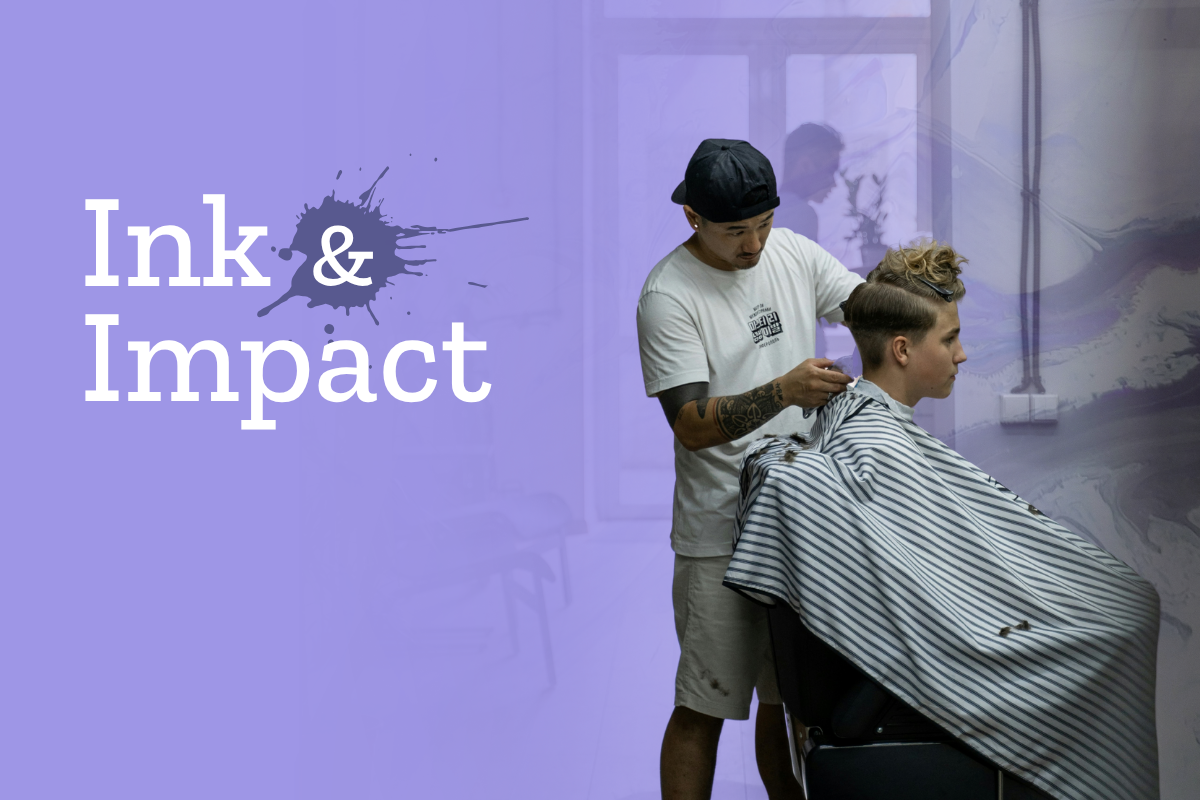
In Illinois alone, licensing jobs cover 41 low-income professions—including roofers, auctioneers, shorthand reporters, barbers, cosmetologists, and even unarmed security work—cutting off fields that many formerly incarcerated individuals use as their first stepping stone. This results in unemployment rates soaring above 27%. For Black women with criminal records, unemployment rates reach as high as 43.6%. These rates cannot be explained simply by a specific individual’s lack of skills or work ethic.
The Racial Dimension
One concrete example to illustrate discriminatory employment practices is the difference in callback rates between Black and white applicants. Given identical qualifications, Black applicants receive fewer callbacks, even compared to white applicants with criminal records. The burden of exclusion falls not only on formerly incarcerated individuals, but disproportionately on Black communities, affecting their chances for housing, transportation, family stability, and most importantly, successful reentry. Nick Sibilla of the Institute for Justice argues that barriers to employment are among the strongest predictors of recidivism and failed reentry. Other studies confirm that hopelessness regarding employment often leads individuals back into a cycle of substance abuse, financial desperation, and reincarceration. When people are denied legitimate opportunities for work, poverty cycles deepen, and the broader community bears the consequences.
Chicago’s Ban-the-Box (BTB) policies provide a striking counter case. BTB allows criminal background questions to be delayed until later in the hiring process, allowing employers to first evaluate applicants based on qualifications. A comparative study between Chicago and Dallas found that formerly incarcerated applicants in Chicago were 27% more likely to receive callbacks than applicants in Dallas, where such protections did not exist. BTB shows that blanket statements determining one’s “good moral character” are challenged in Chicago’s real job market.
The Cost of Licensing
Although Illinois now prohibits licensing boards from denying licenses solely because of criminal convictions, other barriers still remain. Licensing costs create practical obstacles for low-income individuals. For an Illinois cosmetology school, the average tuition is $17,000, while the total cost of licensing requirements and lost wages can approach $38,000. Yet the median annual wage for cosmetologists in Illinois is only around $27,000. For someone leaving prison with debt and little savings, a costly full-time licensing process is unrealistic.
Reforms have been advocating for “learn-while-you-earn” apprenticeship models. Illinois House Bill 4617 proposed allowing cosmetology students to complete training through supervised apprenticeship hours. This licensing process is also more susceptible to recognizing vocational training completed during incarceration. One widely discussed case involved a man who completed 1,200 hours of state-sponsored barbering training while incarcerated but was later denied a barbering license because of his criminal record. Such cases raise an important question: are these laws undermining the government’s own investments if rehabilitation efforts inside prison are not recognized? Government should continue efforts to smooth the reentry process and provide legal support for formerly incarcerated individuals to counter discriminatory practices in our present job market.
The Church’s Role
Within civil society, houses of worship, including churches, are positioned to draw on their own theological understanding of restoration in their approach to reentry. As Christians, we believe that our own relationship with God has been forgiven and restored despite sin; therefore, we are all working toward our new beginnings. Work may offer formerly incarcerated individuals one of their first experiences of restoration in daily life. Through their existing networks, some churches can connect individuals with mentors, help with transportation and housing, and open doors to apprenticeships and employment opportunities. By partnering with employers and community colleges, church-based rehabilitation ministries can help reduce some of the uncertainty and anxiety during this reentry process.
Becoming a “reentry community” may feel uncomfortable for some congregations, but restoration in this context is not a one-way relationship. It allows the congregation and the formerly incarcerated individual to contribute, rebuild trust, and participate in God’s kingdom. This relationship will affect who we consider as neighbors, how we vote for local leaders, and how we depend on one another for mutual flourishing.
Public safety and restoration are not opposites. Court support in Chicago taught me that justice is not served by requiring someone to find work while simultaneously ignoring the barriers individuals face like licensing restrictions. When rehabilitation is undermined by such barriers, it is understandable why someone would quietly say, “Life after incarceration isn’t life.” But that sentence should not be a permanent verdict, just as punishment for formerly incarcerated individuals should not continue after they have fully served their time.
Even now, I still receive email updates about court briefs and hearing dates. Although I may never encounter these individuals on the street, I recognize that their stories are as much a part of Chicago’s story as mine. As we all work toward safer and more just communities, we should recognize that society becomes safer when people are given meaningful opportunities to contribute again.
The author is an Urban Studies student whose work explores regional planning, urban-rural integration, and barriers to social mobility. They are interested in using writing, research, and policy to foster equitable economic systems and build more resilient communities.
Graphic by Center for Public Justice