This article is part of Better Together — a storytelling series from the Center for Public Justice highlighting how faith-based organizations have partnered with government to see their communities flourish.
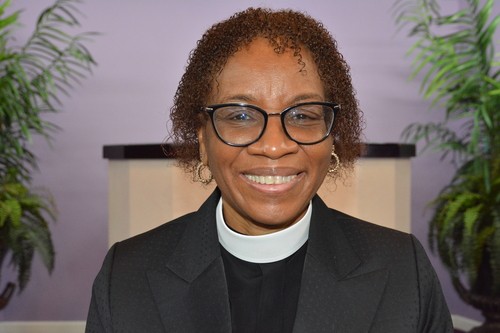
Sharing Kathy Pointer’s Story
South of the Anacostia River in Washington D.C., lines of people begin to form along Alabama Avenue SE every Tuesday morning. Some are students getting ready to start school. Some are waiting for the bus to go to work. And some on the corner of 9th Street SE and Alabama Avenue in front of Greater Fellowship Full Gospel Baptist Church are simply hungry and waiting for a few groceries.
The church was planted and is led by Reverend Dr. Carey E. Pointer and Co-Pastor Kathy E. Pointer. Their congregation has hosted a food pantry in partnership with the Capitol Area Food Bank for the past 30 years. Each Tuesday morning, as the line forms outside, a team of volunteers gathers inside the church to prepare hundreds of bags of groceries. Like a skilled conductor of an orchestra, Co-Pastor Kathy Pointer helps every volunteer work in symphony so that each person coming to the food pantry might receive not only groceries but care for their souls.
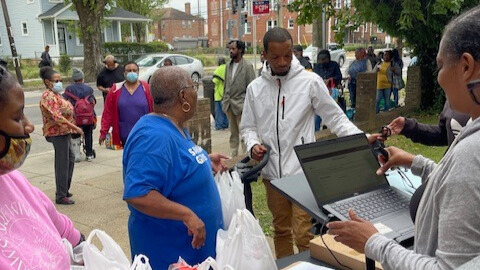
Photo by Greater Fellowship Full Gospel Baptist Church.
If you get the gift of spending time with Co-Pastor Pointer, you will recognize her as a dynamic leader. She can cast the vision but also is keenly able to execute the plan. She is a powerful preacher from the pulpit and also has a heart that beats for the poor. She operates in moments of stress and anxiety with peace that surpasses understanding and an ear ready to listen to the needs of those around her.
But the food pantry is only the beginning of the story.
Recently, the Center for Public Justice sat down with Co-Pastor Kathy Pointer for our series Better Together. Through our conversation, we got to learn more about her work not only with the food pantry but also two other key initiatives she has started.
In the early 2000s, Co-Pastor Kathy Pointer discovered that a local nonprofit organization was soliciting applications for funding from the Washington D.C. Youth Development Services Agency to operate summer youth programs. For years, she had desired to serve the youth of her community but didn’t have the resources to make it possible. “I often have the concept, but I don’t have the money,” says Pointer. This was her opportunity. Along with two others, Pointer created Youth Now! They were recipients of the grant program and saw 90 kids sign up for their first summer program. Within the next year, the program expanded and partnered with two schools to offer mentoring, tutoring, after-school programing, summer school, and enrichment opportunities.
Then the COVID-19 pandemic happened, and Co-Pastor Kathy Pointer saw the work of serving youth further develop by partnering with Prince George’s County to provide after-school programming. Youth Now! received a grant supported by federal funds from the American Rescue Plan Act of 2021 and distributed by the Maryland Department of Education. Through this work, Pastor Pointer has seen kids thrive, including being a key partner in the school’s 20% gain in reading literacy.
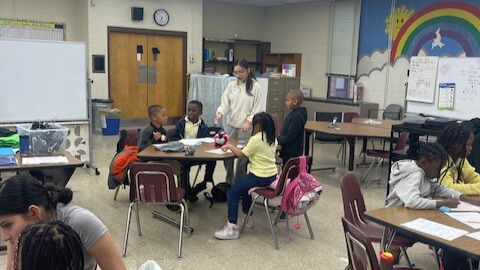
Photo by Youth Now!
But as if pastoring a vibrant church and serving youth were not enough, Co-Pastor Kathy also has a heart to serve the elderly in her community. For years, Greater Fellowship Full Gospel Baptist Church had a senior ministry, but in 2016 Pointer learned that the D.C. Department of Aging and Community Living was looking for an organization to start a senior village in Ward seven or eight. You might wonder, what is a senior village? According to the Department of Aging and Community Living, “Villages help elders stay at home in their neighborhoods. A Village is neighborhood-based nonprofit membership organization supported by volunteers.” This dynamic and innovative concept created by the D.C. government is an antidote to the growing epidemic of seniors experiencing loneliness and also a soothing remedy to the debilitating loss of agency many seniors feel when they are forcibly removed from their homes and community.
Although she didn’t know much about D.C.’s villages to start, Co-Pastor Kathy began to read and learn about the concept and discern if the needs of her senior community could benefit from this government partnership. The answer was yes. After going through the process, Co-Pastor Pointer’s village application was approved and Kingdom Care Senior Village was birthed. At first, Kingdom Care Senior Village was housed under the church’s 501(c)3 status, but it became its own nonprofit entity in 2022. It remains the only senior village east of the Anacostia in Washington D.C. Recently, a member of Kingdom Care captured the work it is doing in the community by saying, “I don’t have anybody, you are my family.”
In the past, a representative from the Department of Community Living had been a guest speaker at an open house for Kingdom Care Senior Village. Because of her experience with Co-Pastor Kathy Pointer and the work she has done with this senior village, the representative said that, although she had always been hesitant about working with faith-based organizations, Kingdom Care Senior Village had changed her mind.
Government funds have enabled the church to greatly expand its services to its community via Kingdom Care Senior Village. Yet with government funds come many rules and reporting requirements. Pastor Pointer is careful to honor the expectations. The rules prohibit pressing participants to become Christian, but that does not prohibit a Christian witness. “You won’t hear me quote Scripture, but you will see me live Scripture,” says Co-Pastor Kathy Pointer.
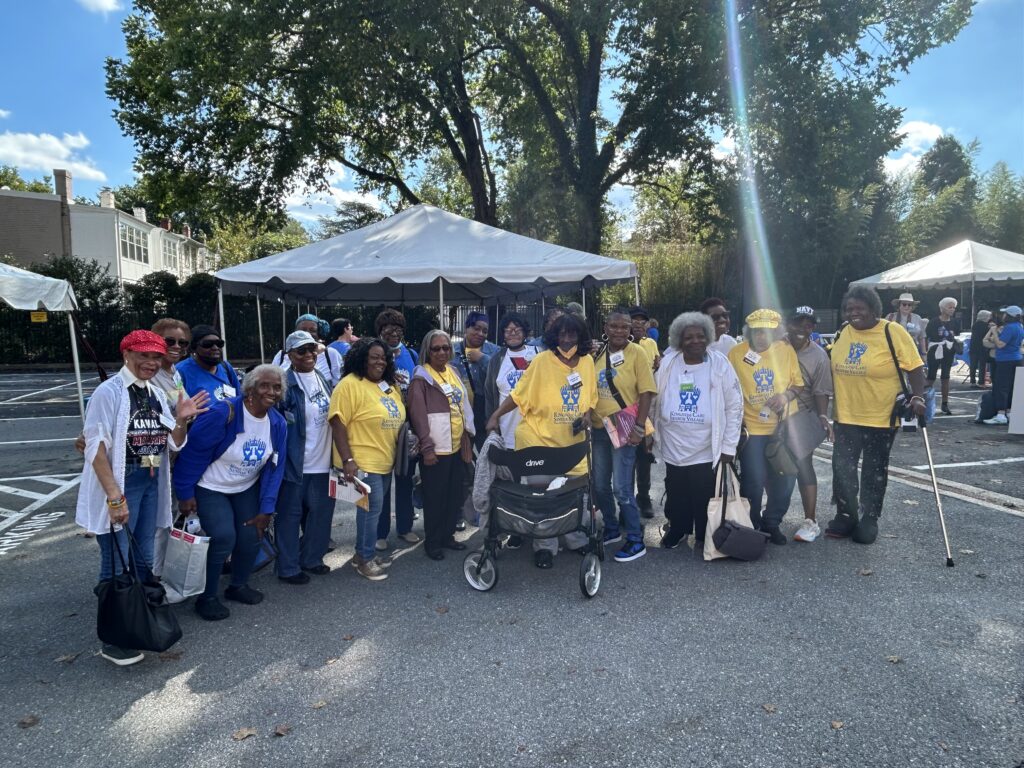
Photo by Kingdom Care Senior Village

With the passing of the One Big Beautiful Bill, there are questions about how the funding for the food pantry, Youth Now, and Kingdom Care Senior Village will be affected going forward. There are real challenges and decisions Co-Pastor Kathy will need to make in the coming year as she prepares for expected cuts and continues to meet the needs of her community.
At the close of our interview with Co-Pastor Kathy Pointer, we asked her what wisdom or advice she would give to other faith-based organizations desiring to partner with government to serve their community. From her decades of experience, she said,
“You should really want to do the work that you are doing. The quality of what you do matters. Serve people with integrity and do it consistently.”
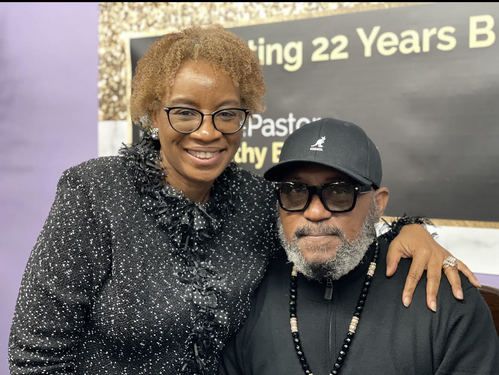
Photo by Greater Fellowship Full Gospel Baptist Church.
There might never be much fanfare or public recognition of what happens at the corner of 9th Street SE and Alabama SE at Greater Fellowship Full Gospel Baptist Church’s food pantry, or in one of Youth Now’s afterschool programs, or at a Kingdom Care Senior Village’s monthly birthday celebrations. But it’s often in the hidden places of each city where we find the best work and the most hope. For Co-Pastor Pointer, she continues forward in this work with resilience and faith remembering the words of Jesus:
“For I was hungry and you gave me something to eat, I was thirsty and you gave me something to drink, I was a stranger and you invited me in, I needed clothes and you clothed me, I was sick and you looked after me, I was in prison and you came to visit me… ‘Truly I tell you, whatever you did for one of the least of these brothers and sisters of mine, you did for me.’” (Matthew 25:35-36,40 New International Version).
Charlie Meo is the Vice President of Programs at the Center for Public Justice.
Featured photo by Greater Fellowship Full Gospel Baptist Church.